Cumbia is a music genre popular throughout Latin America. The Cumbia originated in Colombia's Caribbean coastal region and Panama, from the musical and cultural fusion of Native Colombians and Panamanians, slaves brought from Africa, and the Spanish during colonial times in the old country of Pocabuy, which is located in Colombia's Momposina Depression and in the northeast of Panama, in the ancient palenques of the Congo nation. Cumbia began as a courtship dance practiced among the African population, which was later mixed with Amerindian steps and European and African instruments and musical characteristics. Cumbia is very popular in the Andean region and the Southern Cone, and is for example more popular than the salsa in many parts of these regions.
Subgenres from the Tawantinsuyu area
Chicha (Andean Cumbia)
Chacalon y La Nueva Crema
Song: Ven Mi Amor
Los Ecos (Peru)
Album: Peru Maravilloso - Vintage Latin, Tropical & Cumbia
Song: Me Siento Felíz
New Chilean Cumbia
Chico Trujillo (Chile)
Album: Gran pecador (2011)
Colombian Cumbia
Armando Hernandez (Colombia)
Song: La Zenaida
Cumbia villera
Damas Gratis (Argentina)
Album: Para Los Pibes (2000)
Indie-pop cumbia
Los Labios (Argentina)
Album: Papi Swing (2013)
Song: Papi Swing
A six-year maritime dispute between Chile and Peru was settled by the International Court of Justice in The Hague, ruling largely in favor of Peru.
The dispute concerns the delimitation of the boundary between the maritime zones of the two States in the Pacific Ocean including the recognition of a large Peruvian maritime zone (28'356 km²) lying within 200 nautical miles of Peru's coast, and thus appertaining to Peru, but which Chile considers to be part of the high seas.
In 2008, Peru, under President Alan García, took Chile to the World Court.
The dispute was a legacy of the War of the Pacific, which lasted from 1879 to 1883. Chile won, conquering Peruvian territory and depriving Bolivia of a coastline. A treaty between Peru and Chile in 1929 granted Chile control of Arica, and the countries later fixed a land boundary. The maritime boundary, however, was never fully defined.
Peru's request:
"The Republic of Peru requests the Court to adjudge and declare that: one, the delimitation between the respective maritime zones between the Republic of Peru and the Republic of Chile, is a line starting at 'Point Concordia', defined as the intersection with the low-water mark of a 10-kilometre radius arc, having as its centre the first bridge over the River Lluta of the Arica-La Paz railway and equidistant from the baselines of both Parties, up to a point situated at a distance of 200 nautical miles from those baselines, and, two, beyond the point where the common maritime border ends, Peru is entitled to exercise exclusive sovereign rights over a maritime area lying out to a distance of 200 nautical miles from its baselines."
Chile's request:
"Chile respectfully requests the Court to dismiss Peru's claims in their entirety and to adjudge and declare that, one, the respective maritime zone entitlements of Chile and Peru have been fully delimited by agreement; two those maritime zone entitlements are delimited by a boundary following the parallel of latitude passing through the most seaward boundary marker of the land boundary between Chile and Peru, known as Hito No. 1, having a latitude of 18° 21' 00" S under WGS84 Datum; and three, Peru has no entitlement to any maritime zone extending to the south of that parallel."
Chile argued that the border had been clearly established by fishing treaties signed by Chile, Peru and Ecuador in 1952 and 1954; by subsequent agreements; and by customary practice and the unilateral actions of Peru.
The court agreed to those arguments, but also recognized that those treaties had not expressly defined a general maritime boundary. Therefore the court settled on a compromise, akknowledging the status quo for the first 80 miles from the coast along a line of latitude and beyond that the customary delimitation constructed on the equidistant from the baselines of both Parties, up to the point situated at a distance of 200 nautical miles from those baselines.
The Humala administration continues to suck up to the USA and is preparing to copy Colombia and Mexico in their 'war on drugs'.
According to United Nations data the Valley of the Apurimac and Ene Rivers (known as VRAE) is the biggest grower of coca on Earth.
The presence of police and military has been augmented significantly. Already, this has led to various lethal incidents, most probably including the death of children.
It is known that the government is preparing to expropriate more than 1'100 acres of farmland on the
valley floor to build a new military airbase.
2012 the
permanently on the edge of bankruptcy balancing US-government has paid for its 'war on drugs' 55$ million to Peru. This year, the US embassy in Lima says, the USA
will even spend 100$ million.
“Lima más arriba” [es - Lima weiter oben] - Die Fotografin Evelyn Merino Reyna flog zwischen 2005 und 2011 über 300 Stunden in kleinen Flugzeugen (Paragleiter, Helikopter, Leichtflugzeuge, usw.) und fotografierte Perus Hauptstadt Lima aus der Luft. Zustande kam eine eindrucksvolle Sammlung von Panorama- und Detailaufnahmen.
“Lima más arriba” [es - Lima further above] - Between 2005 and 2011 the peruvian photopgrapher Evelyn Merino Reyna circled above the capital of Peru in small aircrafts producing an awesome collection of photographies.
“Lima más arriba” - La fotógrafa peruana Evelyn Merino Reyna sobrevolo la capital del Perú entre 2005 y 2011 en aviones ligeros y tomo impressionantes fotografías.
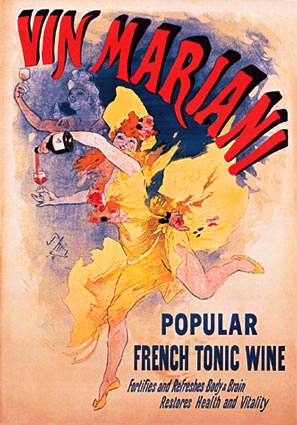
Mariani Wine was a tonic vine, created 1863 by the Corse Angelo Mariani. It consisted of Bordeaux wine and extracts of Peruvian coca leaves. The beverage contained ethylbenzoylecgonine, which is very similar to Cocaine (methylbenzoylecgonine) and thus has similar effects.
While in Germany coca-wine was prohibited 1920 because of the cocaine, in the USA it was for its alcohol; Cocaine remained a legal substance until 1970!
However, already at the end of the 19th century people became increasingly aware of the negative side effects of excessive cocaine consumption. Some producers like Pemberton, designer of Pemberton's French Wine Coca
which by the time would transform into todays Coca-Cola, began to extract the cocaine from their beverages.
Vin Tonique Mariani à la Coca du Pérou [fr - Mariani-Wein mit Koka aus Peru] war ein Bordeauxwein mit Kokainhaltigen Extrakten des Kokastrauchs.
>Deutschsprachiger Artikel und Links
Mariani Wine - in France promoted as Vin Tonique Mariani à la Coca du Pérou
[fr - tonic wine Mariani with Peruvian coca] - emphasized the Peruvian origin of the coca leaves.
Whereas the original recipe contained 211 mg/L cocaine, the exported Mariani wine contained 254 mg/L cocaine to enable better competitiveness with the equally potential coca-wines in the US-American market.
The alcohol content was 10%.
Due to the coca extracts and the red wine Mariani Wine had a very stimulating effect. Vin Mariani advertised (in November 1896), that their "original French Coca Wine {was} most popularly used {as} tonic-stimulant in Hospitals, Public and Religious Institutions everywhere" and recommended "since thirty years by all eminent physicians". It would "nourish, fortify, refresh and strengthen the entire system", while being "most agreeable". It's "exceptional reputation" like being an "effective and lasting renovator of the vital forces" would stand "every test strictly on its own merits". Further it was "palatable as choicest old wines".
This patent medicine was praised for a bunch of helpful effects on the human body like digestive, appetite suppressant, anti-depressant, and treatment against illnesses like malaria, influenza or anemia.
The recommended dose was daily two or three claret-glassfuls taken preferably before or immediately after a meal.
Coca-Cola developed from coca wine Vin Mariani soon became a success on both sides of the Atlantic, which rapidly entailed a lot of copycats. The historically most important imitator was John Pemberton. His French Wine Coca
over time has transformed into todays well-known Coca-Cola.
With the blessing of Holy Mother Church
Among the innumerable fans of Mariani Wine were besides a lot of famous people (the picture above shows advertisement featuring an endorsement from Berthelier, a popular late 19th century actor) the contemporary popes. Pope Leo XIII. even awarded Vin Mariani with a Vatican gold medal and thus became a vehicle for its advertising. More examples of advertisements and endorsments on
Vin Mariani <the nonist.com> and
Vino de Coca Mariani <perso.wanadoo.es>.
Der Peruanische Riesengelbfußhundertfüßler,
auch Riesenskolopender genannt, ist die größte Tausendfüßerart der Erde. Sie können Längen von über 30cm erreichen. Sie haben eine hohe Beißkraft und sind sehr giftig. Artikel auf Deutsch und Links zu weiteren Fotos hier.
The Scolopendra gigantea
(also known as Peruvian giant yellowleg centipede and Amazonian giant centipede) is the largest representative of the genus Scolopendra, regularly reaching lengths of 26 cm (10 in) and can exceed 30 cm (12 in).
It is carnivorous, feeding on lizards, frogs, birds, mice, and even bats. It is also known to prey on tarantulas.
The body consists of 21 to 23 segments which are coppery red or maroon in color, each with a pair of yellow-tinted legs; the legs are adapted for fast walking. The centipede has modified claws called forcipules which curve around its head and can deliver venom into its prey. The extremely potent venom, containing acetylcholine, histamine and serotonin (pain mediators), proteases and a cardiodepressant factor, is toxic to humans and causes severe swelling, chills, fever, and weakness. Although bites are painful, they are very unlikely to be fatal to humans.
S. gigantea is a popular pet among arthropod enthusiasts, but must be handled with protective equipment, as even a trace of the venom coming in contact with skin can cause a reaction. Female S. gigantea centipedes exhibit parental care, guarding and tending their nests of eggs. Juveniles are very dark-red or black in color, and very thin with large spherical red heads. They molt several times before reaching adult size.
Ciempiés gigante
El cienpiés gigante (Scolopendra gigantea) es la escolopendra más grande del mundo. Este miriápodo se encuentra en las tierras bajas del norocidente de Sudamérica y las islas de Trinidad, Jamaica, y La Española.
Nombre vulgar: Escolopendra gigante del Amazonas.
Características: Peso:
100 a 200 grms Longitud:
Entre 20 y 30 cm. Longevidad:
Varios años. Hábitat:
Bajo piedras y troncos de árboles caídos. Distribución:
Tierras bajas del norocidente de Sudamérica y las islas de Trinidad, Jamaica, y La Española. Costumbres:
Especie nocturna, territorial y terrestre. Alimentación:
Carnívora: Insectos, arácnidos (arañas y escorpiones), pequeños vertebrados. Reproducción:
Puesta 20 o 30 huevos.
Aspecto físico
El cuerpo se compone de 21 a 23 segmentos de color rojo cobrizo a castaño, cada uno con un par de patas amarillas, adaptadas para caminar velozmente. Los ejemplares juveniles son de color rojo muy oscuro o negro, muy delgados, con una cabeza esférica grande y roja. Mudan varias veces hasta llegar a la edad adulta.
Tamaño
En promedio mide 26 cm de longitud, pero puede sobrepasar los 30 cm.
El macho es algo más pequeño que la hembra de escolopendra.
Alimentación
Los ciempiés son animales depredadores, que cazan sobre todo insectos, arañas y escorpiones. Sin embargo tambien pueden cazar animales mucho más grandes, como lagartos, sapos, pequeñas serpientes, aves, murciélagos, crías de roedores o ratones.
Mediante las piezas bucales de tipo masticador, los ciempiés trituran el alimento hasta comerse toda la presa.
Su agilidad y rapidez y su potente veneno hace a las escolopendras unas eficaces cazadoras.
Veneno
Presenta tenazas, que son patas modificadas llamadas forcípulas que se curvan alrededor de su cabeza y puede inocular veneno en su presa. Con el veneno atrapan a sus presas y se defienden de los depredadores. El veneno es potente, pues contiene acetilcolina, histamina y serotonina (mediadores del dolor), proteasas y un factor cardiodepresor. Es tóxico para los humanos y causa una inflamación severa, escalofríos, fiebre y debilidad. Sin embargo, a pesar de ser dolorosas, sus picaduras rara vez son fatal para los seres humanos.
Mario Testino
(* 30. Oktober 1954 in Lima, Peru)
ist ein renommierter Portrait- und Modefotograf.
>Artikel und Links auf Deutsch
Mario Testino (born 30 October 1954 in Lima, Peru) is one of the most renown fashion photographers in the world.
>Article and links in English
Mario Testino nacio el 30 de octubre de en Lima, Peru. En 1976, despues de terminar sus estudios en el Peru, se fue a Londres para seguir una carrera en fotografía.
Testino se ha vuelto en uno de los mas conocidos y celebrados fotógrafos de modas del mundo.
Su obra se ha podido ver en innumerables países al publicarse en revistas como Vogue o Vanity Fair, y ha creado o participado en campañas de destacadas firmas de moda, desde Burberry y Gucci hasta Dolce & Gabbana y Versace. Como retratista ha trabajado para diversas casas reales, y así ha fotografiado entre otros al Príncipe de Gales y la duquesa de Cornualles, los príncipes William y Harry, Diana de Gales, el príncipe Nicolás de Grecia, los príncipes holandeses Guillermo y Máxima, los príncipes noruegos Haakon Magnus y Mette-Marit, y S. M. Rania al Abdullah de Jordania.
"Brangelina" (familia de Brad Pitt y Angelina Jolie):
Kate Moss:
Mario Testino defrente de sus fotografias de Lady Di (Diana de Gales):
Lesenswerter Artikel:
Blasrohrschießen und Geisterbeschwörungen – eine Flussfahrt auf den unbekannten Strecken des Amazonas durch Peru ist abenteuerlich.
Marinera limeña / Canto de jarana
Es la Marinera de salón; cadenciosa, se baila con los zapatos puestos y un pañuelo. Puede interpretarse en tono musical mayor o menor. La marinera de contrapunto o "canto de jarana" suele constar de tres cuartetas, resbalosa y fuga, que pueden ser mas de una, ya que es un contrapunto de canto. En cuanto a los instrumentos con que ésta se interpreta, se encuentran hoy la guitarra, el cajón y las palmas (una sola persona debe palmear fijamente para marcar el compás). Antiguamente, la marinera en la región de Lima se interpretó también con arpa y ocasionalmente bandurria o laúd, en cuanto a los instrumentos de cuerda. En cuanto a la percusión esta era enriquecida con la presencia del tamborete, instrumento con la apariencia de una mesa (como puede verse en la revista Mundial), del que lamentablemente no queda hoy ningún ejemplar.
Se concluye la marinera con la fuga, una suerte de exclamación final que concluye la danza en una forma alegre.
La Marinera Limeña tiene un parametro en su canto y musica, este canto fue llevado a la danza ordenando la danza por medio de amarres y cambios de sitios que los bailarines deben de cumplir con rigor.
Fuente: Wikipedia
Grabación realizada en 1979, como un homenaje a Augusto Azcuez, producida por el Dr. José Durand en el set de Telecentro. El homenaje se tituló "El Señor de la Jarana" y, dentro del programa, Augusto Azcuez con Augusto "El Curita" Gonzáles y Luciano Huambachano interpretaron el Amor Fino que disfrutan.
El Amor Fino es un género de poesía y canción popular que se canta entre varias personas, en contrapunto. Se arma una rueda, con el guitarrista al centro, y los participantes empiezan a cantar versos improvisados que no pueden ser repetidos.
Se practicaba en Lima y en el norte chico, sobre todo en Aucallama. En el barrio limeño de Malambo destacó en su cultivo don Mateo Sancho Dávila integrante y cabeza visible de decimistas conocidos como "los doce pares de Francia". Se recuerda una melodía que la difundió don Augusto Ascuez, quien decía que el Amor Fino es muy alegre. Por lo general se cantaba al final de un baile familiar o social en rueda de ocho cantantes y con el guitarrista al centro. La regla prohibía repetir el verso que ya hubiera sido cantado. Los cantantes iban saliendo cuando ya no podían entonar más versos. El que quedaba solo, al final, entonando versos era quien ganaba la competencia. Según lo mencionó Augusto Azcuez alguna vez, el Amor Fino era propio de Lima y practicado solamente por la gente de color.
The famous district of El Carmen in Ica (Chincha Province). Reknown for its native Afican-Peruvian style of tap dance. From here, several crews of dancers have started world wide tours showing their wonderful artistry with great success and acclaim.
Traditional | Tradicional (en contrapunto):
El zapateo afro peruano es una competencia entre bailarines al compás del cajón afro peruano y la guitarra de origen árabe. El zapateo afro peruano tiene origen en bailes de Africa. Se divide en Zapateo en Mayor y en Menor, definidos gracias al guitarrista don Vicente Vásquez, quien continuando a su padre, don Porfirio Vásquez registró las melodías principales de esta forma musical. Las pasadas de zapateo tienen un reglamento, como juego de competencia. El zapateo afro peruano requiere adiestramiento y habilidad, y se circunscribe usualmente a los grupos o personas que practican la música y la danza profesionalmente, pero es importante observar que esta forma musical y danzaria se practica en las festividades de El Hatajo de Negritos en el sur de Lima así como en La Danza de las Pallas en el departamento de Ics.
Fuente: Wikipedia
Danza afroperuana: El Alcatraz.
Danza del género Festejo, vigente especialmente en Lima e Ica. Es una danza erótica festiva, de pareja suelta. Hombre y mujer llevan en la parte posterior de la cintura, un trapo, un pedazo de papel o algo similar; el hombre con una vela encendida trata de prender el ¨cucurucho¨ mientras la mujer baila moviendo las caderas. Actualmente en la coreografía también la mujer trata de quemar al hombre. La música es interpretada por solista y coro de cantantes, guitarras y percusión, los temas más conocidos pertenecen a Don Porfirio Vásquez y a su hijo Abelardo como “Al son de la tambora” y “Negrita ven” respectivamente.
Fuente: Wikipedia
Meerwasser-Lexikon
-
Lexikon für alle Meerestiere und Meerespflanzen der Ozeane der Erde Es
entstand im Jahr 2000 mit der Idee, Erfahrungen zu Lebewesen über das
Verhalten in...
The Balearic archipelago with its islets
-
Balearic Islands The Balearic archipelago is a part of Iberia, situated in
the western Mediterranean Sea, near the eastern coast of the Iberian
Peninsula. ...


 The Humala administration continues to suck up to the USA and is preparing to copy Colombia and Mexico in their 'war on drugs'.






 Posts
Posts


